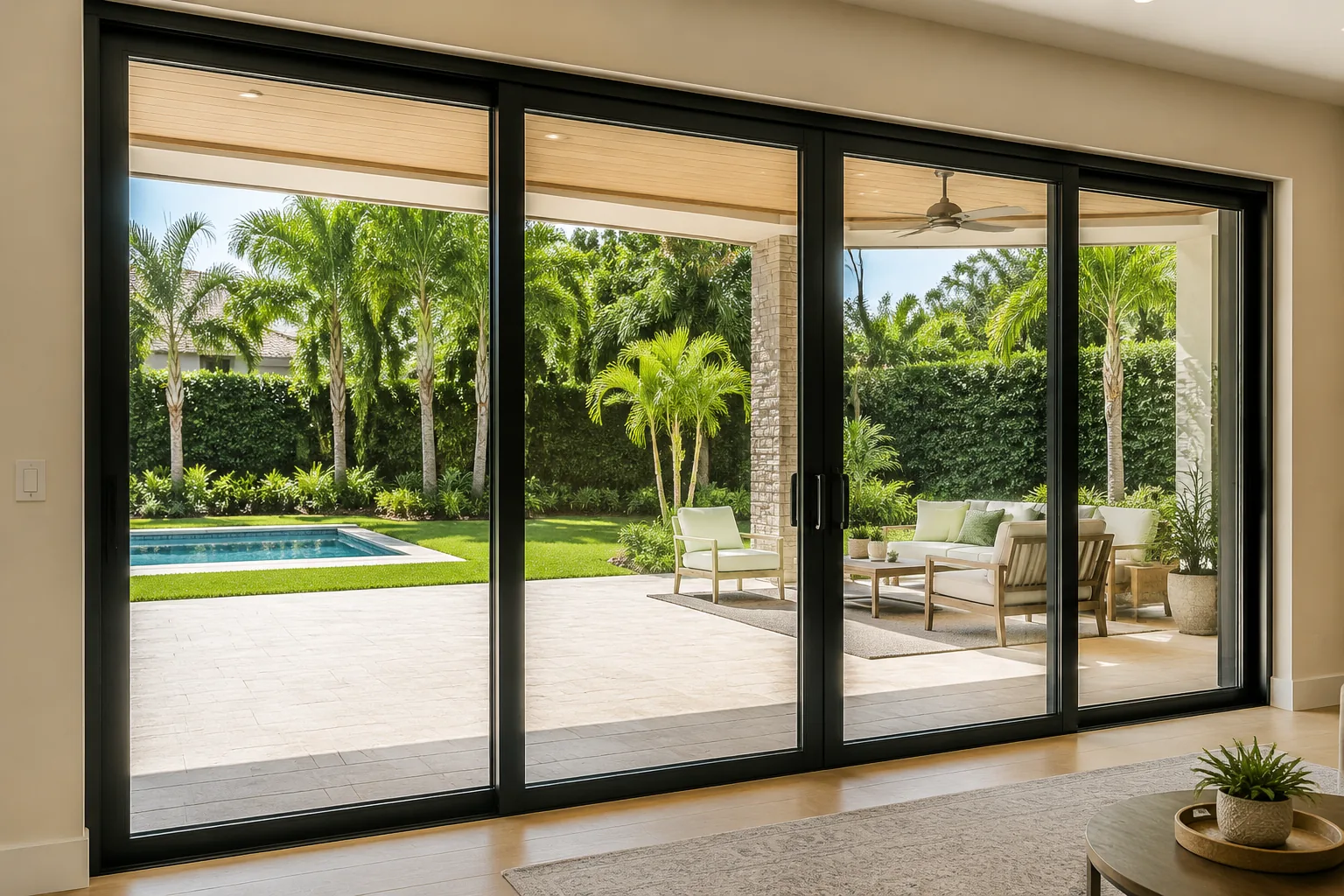
How Salt Air Damages Sliding Doors in Palm Coast
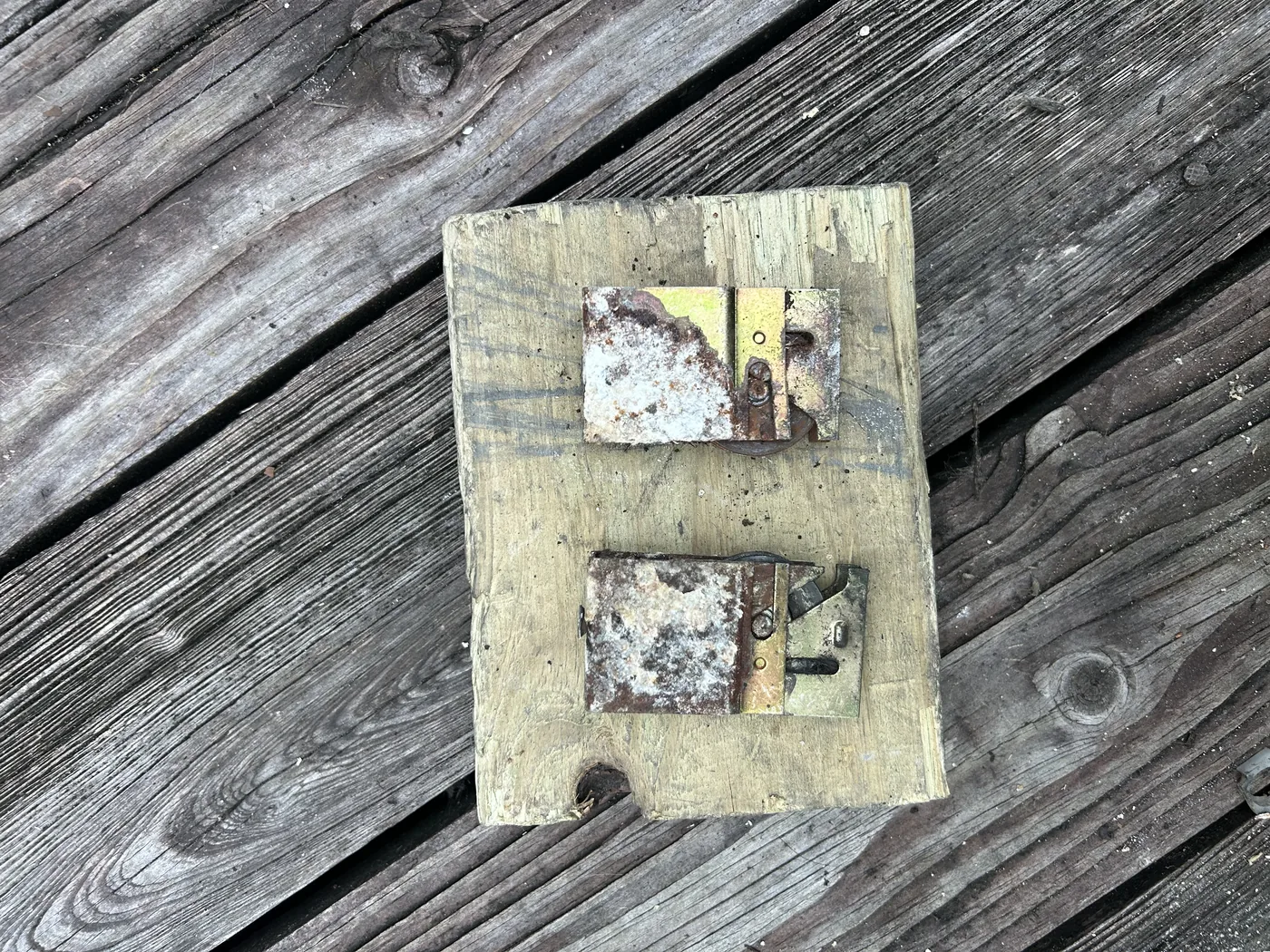
The chemistry and pattern of salt-air corrosion on sliding door rollers, tracks, locks and frames in Palm Coast — and what actually protects against it.
Salt does not need the beach
Salt-air corrosion is not an oceanfront-only problem. Airborne salt travels miles inland on sea breeze, and Palm Coast's saltwater canal system carries brackish exposure deep into neighborhoods like Palm Harbor. If you can occasionally smell the ocean at your house, your door hardware lives in salt.
The mechanism is simple and relentless: salt crystals settle on metal, absorb humidity (abundant here), and form a conductive brine that accelerates electrochemical corrosion. The parts fail from the inside out — a roller bearing is rusted solid long before the wheel looks bad.
Where the damage shows up, in order
Roller bearings first. They are small carbon-steel parts in a hidden, damp channel — the perfect corrosion target. Seized bearings turn rolling into dragging, which then wears flats on the wheels and saws the rail sharp. Most Palm Coast "heavy door" calls trace back to this chain.
Lock internals second. Mortise lock springs and pivots stiffen gradually; the latch that needs a firmer push each season is corroding toward a full seizure.
Track and sill third. Salt pits aluminum, especially where blocked weep holes let storm water stand. Pitting roughens the rollers' running surface and, over years, can perforate the sill.
Fasteners and frames last. Steel screws in aluminum rails corrode galvanically — the white bloom at frame corners — loosening joints and racking panels.
What actually protects a coastal door
Stainless steel wear parts. Stainless rollers, fasteners, and track caps step outside the corrosion chemistry that eats standard hardware. This is the single highest-value upgrade a Palm Coast door can get, and we fit it by default.
Drainage. Clear weep holes mean rain and salt fog drain out instead of pooling as brine in the sill. Thirty seconds with a toothpick twice a year, genuinely.
Fresh-water rinses and dry lubricant. An occasional rinse of the track dilutes settled salt; a dry PTFE or silicone lube protects without gumming into sand-paste the way oils do.
Frequently Asked Questions
How much faster do doors fail near the coast?
As a working rule from our service calls: standard zinc-plated rollers that might last 15+ years inland are commonly finished within roughly 3–7 on the barrier island and canal-front streets. Stainless resets that clock dramatically.
Need This Fixed?
Sliding Door Repair Palm Coast handles exactly this, on site, across Palm Coast and the surrounding area — open 24/7. Call 904-605-1897 or request a free estimate.